
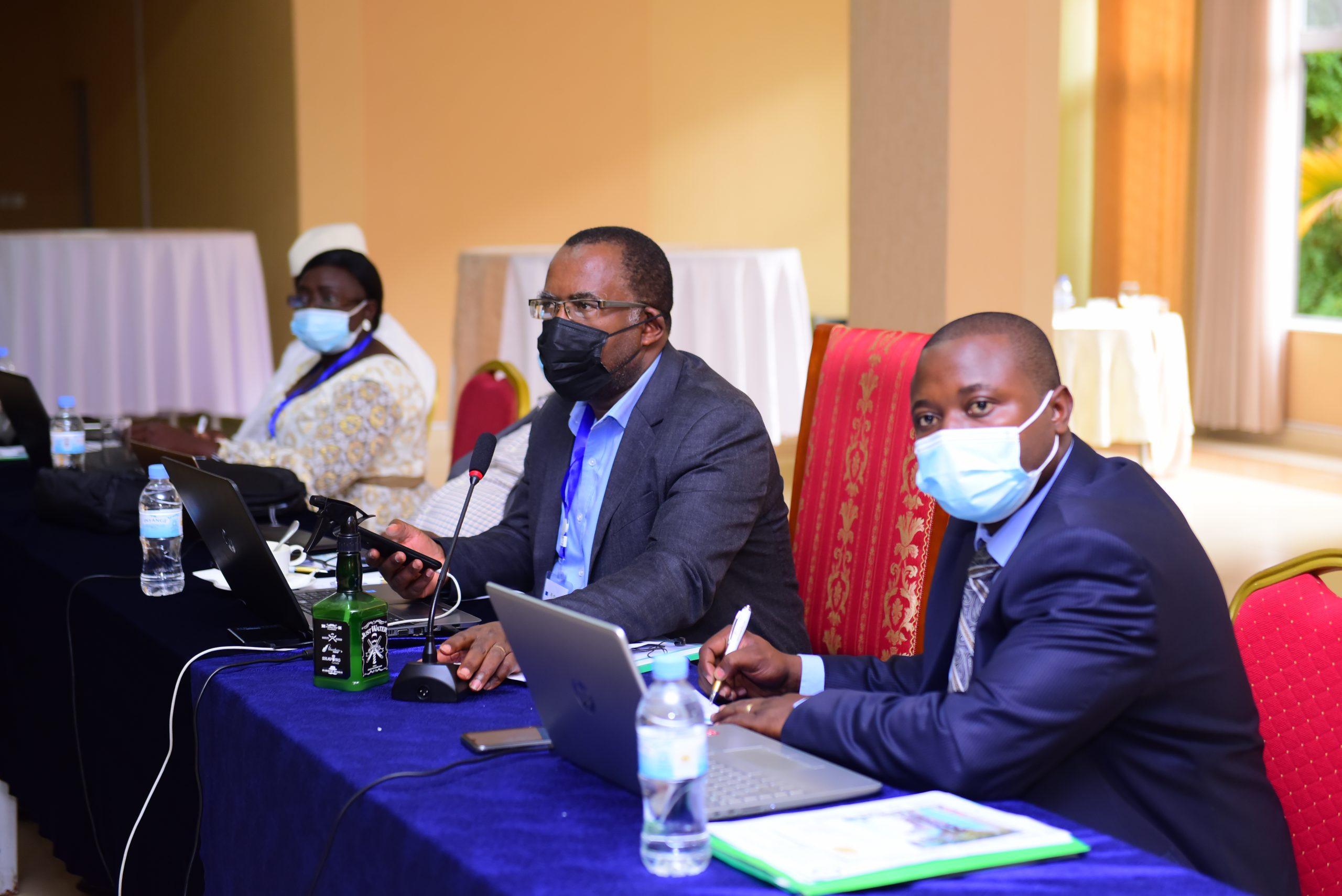
Experts discuss ways to conserve the biodiversity network in Central Africa
By Alexis Nyandwi.
The central Africa Forests Commission (COMIFAC) in collaboration with the Government of Rwanda with support by GIZ Project organized a workshop to discuss the future of central Africa’s biodiversity and harmonization of protected Area Management Policies.
The 5 days of roundtable meeting was attended by representatives of COMIFAC member states, different experts in Conservation and Rwanda Government officials dealing with Environment Nature conservation and forestry.
The main objective of this workshop is to validate two studies, one on the harmonization and improvement of legislative and institutional frameworks relating to the management of Wildlife and Protected Areas (SGTAPFS) and the other on the opportunities for the labeling of Protected Areas in Central Africa.
The recent publication of the State of Protected Areas of Central Africa shows that the sub-regional network currently includes 206 protected areas occupying approximately 799,000 km2, all categories combined, or 14.8% of the land and 5.0% of the land. Exclusive marine economic zone of the countries of Central Africa.
“The forests of the Congo Basin are on the way to becoming the first green lung of planet earth after the heavy deforestation recorded in recent years in the Amazon basin”, underlines Chouaibou Nchoutpouen Deputy Executive Secretary of COMIFAC.
He recalls that their role in storing carbon is therefore essential in a context of global warming. Recent estimates from Global Forest Watch (GFW) researchers show that the forests of the Congo Basin sequester 600 million tonnes of CO2 more than they emit per year. Their average emissions and absorption reach respectively 530 million and 1.1 billion tonnes of carbon.
Within the framework of the implementation of Lines of intervention N ° 1 and N ° 3 of the COMIFAC Convergence Plan, relating respectively to “Harmonization of forest and environmental policies” and to “conservation of biodiversity”, the Executive Secretariat of COMIFAC has undertaken with the assistance of IUCN through the BIOPAMA Program, two studies namely: (i) the study on the harmonization and improvement of legislative and institutional frameworks relating to the management of Fauna and Protected Areas in the 10 member countries of COMIFAC and (ii) the study on labeling opportunities for protected areas in Central Africa.
Protected areas in Central Africa cover 15% of the land surface and 5% of the region’s marine surface, which represents significant progress towards the achievement of the Aichi Targets – set at 17% for terrestrial areas and 10% for marine areas – adopted by the signatory countries of the Convention on Biological Diversity in 2010. On the other hand, the efficiency of the management of these areas remains to be improved.
Welcoming these two studies commissioned by COMIFAC, the Rwandan Minister of the Environment, Dr Jeanne d’Arc Mujawamariya stressed that this work will not only improve legislation but also mobilize resources for the management of protected areas.
“I would like to express our gratitude to those who have contributed to the realization of these studies.”
Despite these advances, experts recognize that Central African countries still face many challenges and threats of nature conservation in general and sustainable management of forest ecosystems in particular.
This phenomenon manifests itself through the large poaching of flagship wildlife species such as large mammals, illegal logging of forests, abusive and informal logging for energy needs and land use conflicts which constitute some threats. Serious about natural resources.
Indeed, several factors, including the lack of human and financial resources, the low participation of the local populations, the little data on the areas to be controlled as a priority, require special attention in future interventions.
To face these challenges, the experts make use of several tools including in particular: the database of the Observatory of Forests of Central Africa, the sub-regional Action Plan of the Countries of the COMIFAC Space for the strengthening of the Application of National Laws on Wild Fauna (PAPELCAF), the Africa TWIX platform (internet tool for exchange and sharing of information in the fight against illegal trade in products of wild fauna and flora), the Tool for Protected Area Management Effectiveness Assessment (IMET), etc.
The organization of the meeting is made possible thanks to the financial support of IUCN through the BIOPAMA program and the German Cooperation through the regional project GIZ support to COMIFAC.
The Central African Forest Commission (COMIFAC) is an intergovernmental organization in Central Africa. Its goal is to manage the forests of Central Africa in a sustainable manner and is supported by the wildlife trade monitoring network TRAFFIC The secretariat is based in Yaoundé Cameroon.


Leave a Reply