
CSOs need to strengthen capacity to influence policy in justice sector — IMRO
By Elias Hakizimana
Lack of coordination among the Civil Society Organizations (CSOs) is one of the issues that need to be addressed in order to strengthen capacity while influencing policies in the justice sector and further educate citizens about their rights and involvement.
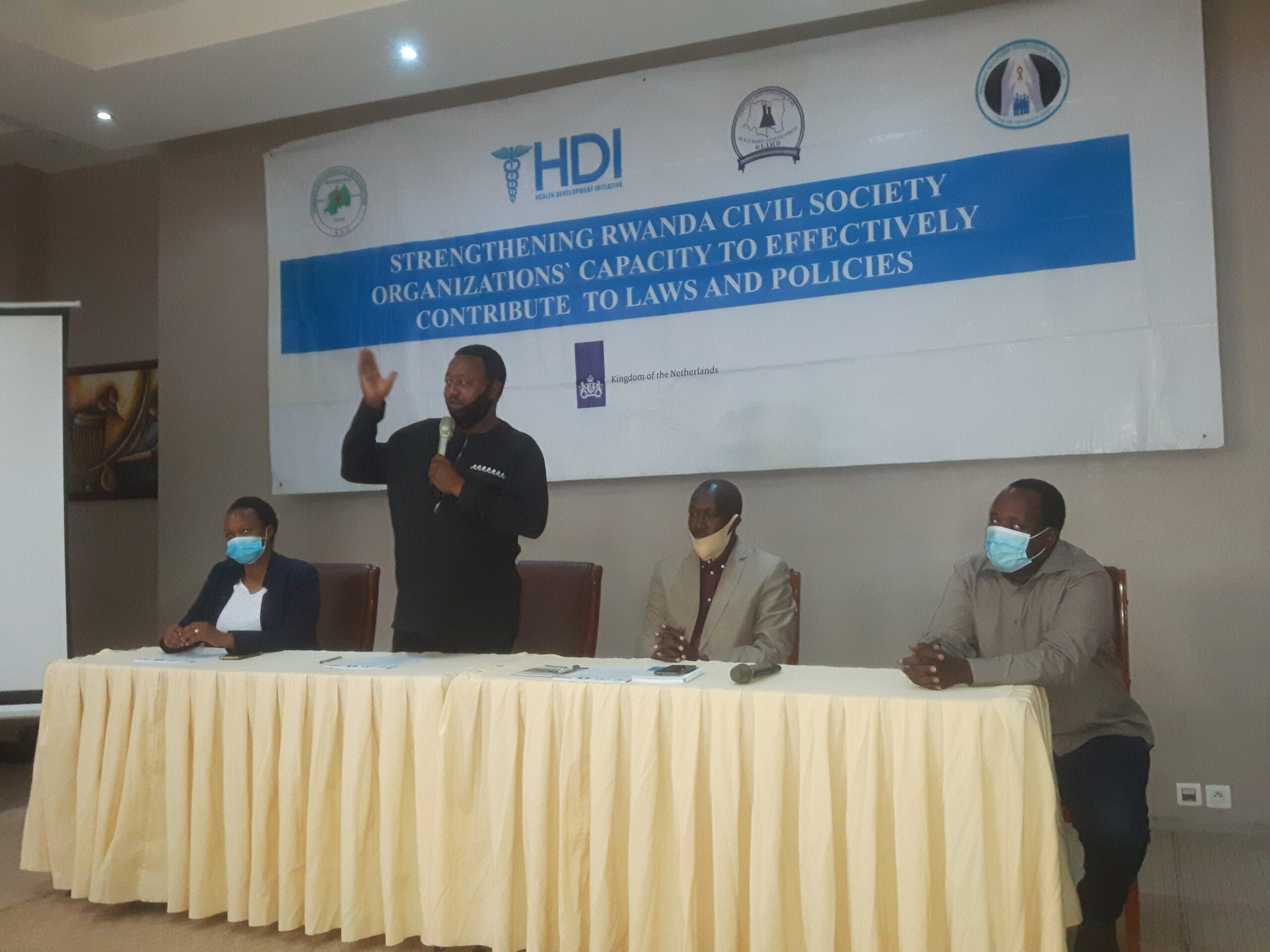
This was revealed by the coalition of four CSOs working in the justice sector under the coordination of Ihorere Munyarwanda Organization (IMRO) on June 24, 2020 during a-one-day meeting in Kigali on the subject of “Strengthening Civil Society Organizations’ Capacity to Influence Policy in the Justice Sector”.
The subject is the current project being implemented by the coalition made of four CSOs namely Health Development Initiative (HDI), Great Lakes Initiative for Human Rights and Development (GLIHD), Rwanda NGOs Forum for HIV and Health Promotion (RNGOF) and Ihorere Munyarwanda Organization (IMRO).
Aimable Mwananawe, IMRO National Coordinator said that the project came to respond to the current issue of lack of coordination where various organizations managed to meet and know eachother.

“Many organizations with similar mandates were working separately and without effective results in the districts and in the ministry of justice, we started these initiatives to reinforce this coordination, CSOs met and realized that they have same mission and vision. What they need to do is to have coordination in availing national response in the justice sector. This will reduce adequate goings and comings of citizens from courts through alternative conflict resolution,” Mwananawe said.
He added that they will teach citizens about how to prevent injustice and know their Rights, know the laws and prevent a crime before it is committed. “This project will strengthen partnerships between government, private sector, citizens, and NGOs to fast track national development and people centered prosperity. It will also play a significant role towards the improvement on human rights challenges, extending legal aid to citizens and ensuring access to timely justice,”
Anastase Nabahire, the Coordinator of Justice, Reconciliation, Law and Order Sector Strategy (JRLOS) in the Ministry of Justice welcomed the project as a good initiative to link up efforts from various CSOs with similar missions and visions.

“The project of these CSOs is of great value because it aims at helping various stakeholders to know each other, to partner with the ministry of justice and its MAJ offices in the district. After knowing each other, they will also know the vision of work of an organization and how they complement with other activities of stakeholders. After assessing the weaknesses and their strengths, they will make possible improvement,” Nabahire noted.
Nooliet Kabanyana, Executive Secretary of Rwanda NGOs Forum for HIV and Health Promotion reiterated that a significant step was made since last year until May 2020, where a law on alternative conflict resolution was made and validated.

“This will help people to find a solution from within when they have conflicts, it will help them save time and money spent in court procedures as they will manage to find solutions through mutual discussions,” she noted.
Euphrem Nteziryayo, Executive Director of CCN-Rwanda organization said that coordination efforts play a vital role as everyone is engaged in resolving conflicts without joining courts. “As civil society, we are proud of the efforts we have in seeking solutions to various problems and we encourage citizens to seek efforts of handling their issues from within without court procedures,” he noted.





Leave a Reply