
Civil society calls for removal of existing barriers to women’s Rights
By Elias Hakizimana
Civil society organizations celebrates 17 years of Maputo protocol calling for more efforts to implement a woman’s rights by removing existing barriers that hinder the progress.
Maputo protocol was signed on July 11, 2003. Rwanda signed this protocol and hesitated on its 14 article relating to abortion but in 2012, the country accepted to implement all the components of the protocol during the new amendment of penal code.
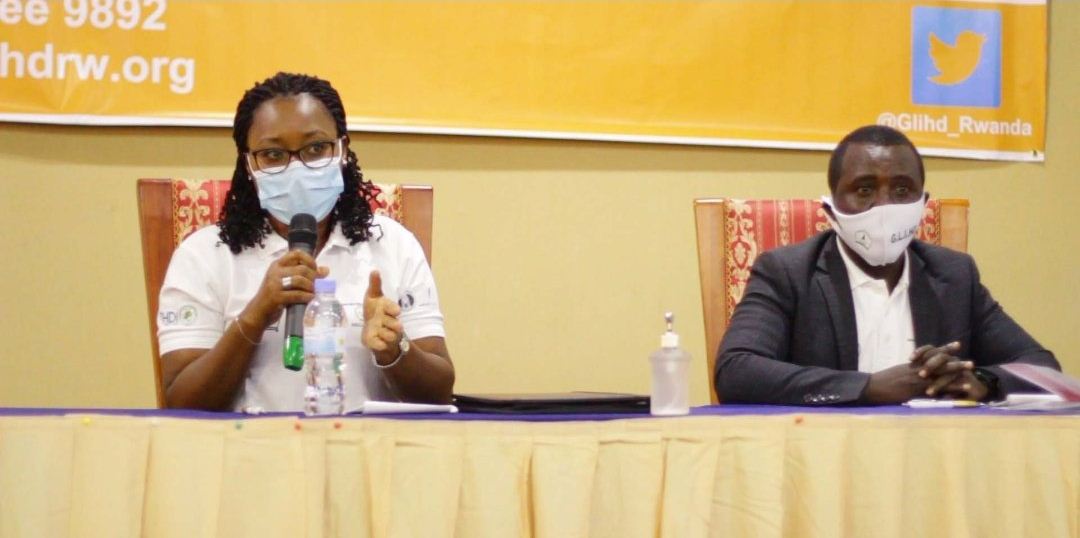
Tom Mulisa, Executive Director of Great Lakes Initiative for Human Rights and Development (GLIHD) said that Maputo protocol was signed to ensure the rights of African women are respected. The theme of this year’s Maputo protocol anniversary embarks on The Role of a Rwandan Woman in the National Development.
“We are happy that Rwanda is among the countries that fully implement Maputo protocol in the region. A woman does not have rights to parents’ inheritance among many of our neighbouring countries; most of the east African countries accept marriages of three categories: traditional, civil and religious marriages, all compromising on the rights of the woman. So, we are happy that Rwanda accepted all the articles of this protocol,” Mulisa said.
He said that Rwanda has good policies that promote women’s rights but mindset remains a challenge.
“There is a problem of poor mindset on a woman’s rights, fear of women to speak out kinds of violence they face and culture makes them to hide domestic violence, we are thinking of launching a campaign and use the media in explaining the rights of a woman out there in the communities,” he added.
Aflodis Kagaba, Executive Director of Health Development Initiative (HDI) said that many people do not know Maputo protocol, highlighting that the international day of Maputo protocol embarks on the way forward to explain this protocol to the citizens.
“When we say for example the rights of women in education, in decision making and in the country’s leadership we can see a good improvement on Rwanda’s side among other African countries.” Kagaba said.
“Today we are discussing with the government on how to reduce unwanted pregnancies among adolescent girls, we are discussing how a pregnant adolescent can continue studying while pregnant, we are also discussing on family planning policies and safe abortion,” he added.
He noted that all the norms and issues that still violate a woman’s rights will be discussed to find a solution. “Today is a good occasion to evaluate the achievements and assess what should be the next step to tackle existing barriers by giving equal rights to both girls and boy children,” he noted.
The Minister of Gender and Family Promotion Prof. BAYISENGE Jeannette said that a lot have been done in fostering women’s rights since the country signed Maputo protocol.
She noted that the Ministry is encouraging all the public institutions and private sector to employ gender equality in all the activities under their planning to ensure women’s rights are respected.
Maputo protocol was adopted by the African Union in July 2003 in Maputo, Mozambique. The Protocol guarantees comprehensive rights to women, including the right to take part in the political process, to social and political equality with men, improved autonomy in their reproductive health decisions, and an end to female genital mutilation.
elias.theinspirer@gmail.com



Leave a Reply