
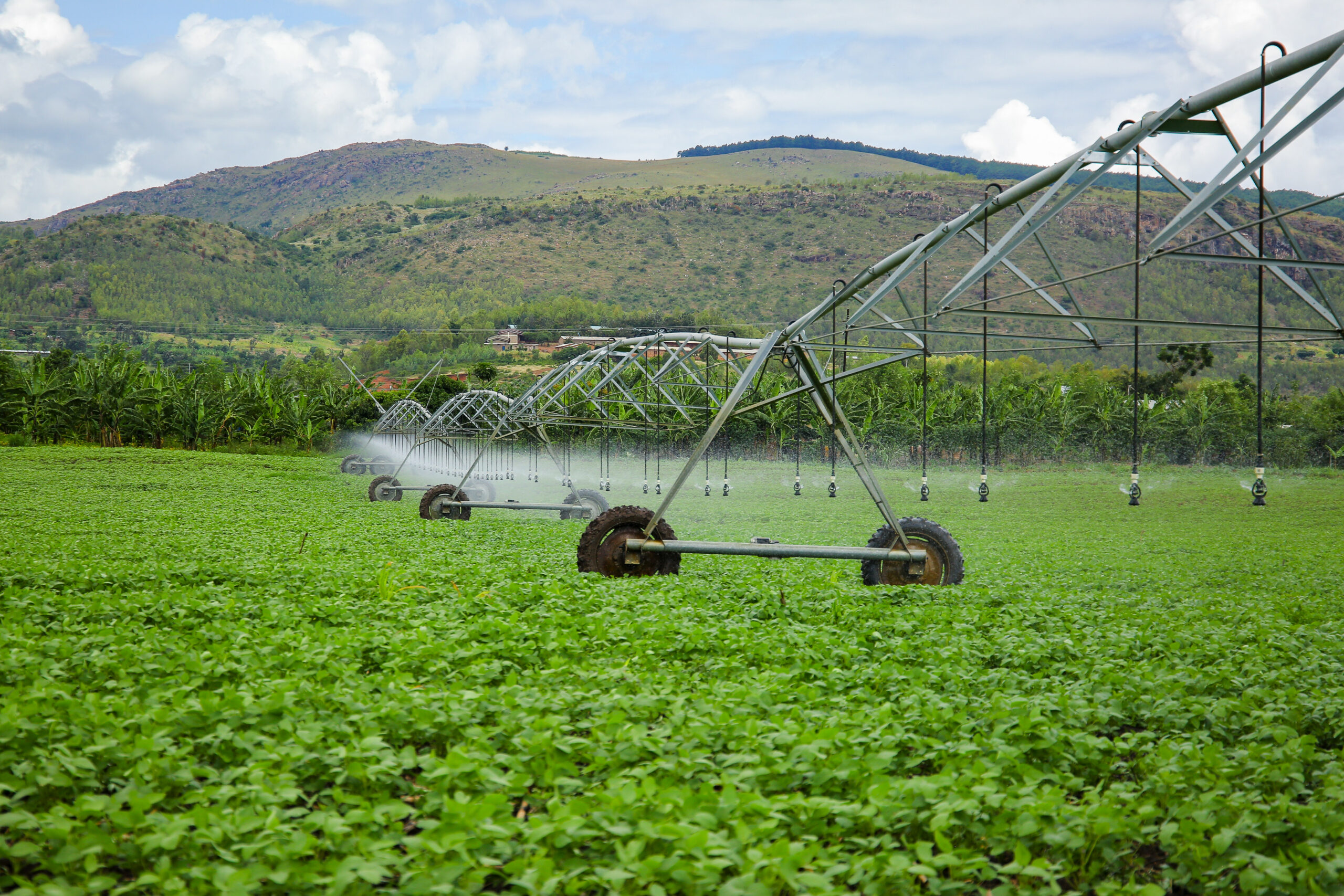
Rwanda pledges continued irrigation support for small-scale farmers
By Elias Hakizimana.
Rwanda’s agriculture authorities say the government will continue subsidising irrigation equipment for small-scale farmers, as the country seeks to expand the amount of land under irrigation.
The announcement was made at a technical meeting in Kigali on Thursday, September 24, 2026, organised by the Coalition of Civil Society Organizations for Development and Advocacy in Rwanda (CCOAIB).
The meeting brought together government officials, private-sector representatives, civil society organisations and development partners to discuss the challenges facing small-scale irrigation.
An assessment presented at the meeting found that farmers were struggling not only with the cost of irrigation equipment, but also with maintaining and repairing machines once they break down.
Bazi Frodouard, a maize and soybean farmer in Gatsibo District, said his cooperative had 12 irrigation machines but could no longer use them after they broke down.
“We have 12 machines, but they have all broken down. We cannot find replacement parts to repair them,” he said.
He said a lack of reliable irrigation could result in significant losses for farmers who had already invested in expensive seeds.
“When crops are not properly irrigated, it is a loss for the farmer,” he said, calling for better access to spare parts and repair services.
Government subsidies
Rwanda currently provides subsidies to farmers buying small-scale irrigation equipment.
Farmers using petrol or diesel-powered equipment receive a 50% subsidy, while those using solar-powered systems receive a 75% subsidy, according to the Rwanda Agriculture and Animal Resources Development Board (RAB).
Dr Florence Uwamahoro, RAB’s acting director general, said the government would continue supporting farmers through the subsidy programme.
“Solar-powered irrigation equipment is expensive. The government provides a 50% subsidy for equipment using petrol and diesel, and 75% for equipment using solar energy,” she said.
She said the higher subsidy for solar equipment was intended to make the technology more accessible despite its relatively high cost.
Some irrigation equipment is also purchased through funds channelled through districts and RAB projects, including the Sustainable Agricultural Intensification and Food Security Project (SAIP) and the Commercialization and De-risking for Agricultural Transformation Project (CDAT).
Farmers urged to become more self-reliant
CCOAIB executive secretary Jean Claude Ngendandumwe said farmers could not rely indefinitely on subsidies to meet all their irrigation needs.
He acknowledged calls for higher subsidies but said government resources were limited.
Instead, he argued that farmers should be supported to make agriculture more profitable so that they can gradually invest in their own equipment.
“If farmers can make farming more profitable, professional farmers will eventually be able to buy the equipment they need themselves,” he said.
Irrigation target
The assessment was conducted under the “Twiyubakire-Engage” project, which operates in Muhanga, Nyaruguru and Nyamagabe districts, as well as Gatsibo District.
It found that limited financing, access to equipment and a lack of technical knowledge on operating and maintaining irrigation systems remain challenges for farmers.
Rwanda has about 596,810 hectares of land considered suitable for irrigation.
By 2023, about 71,585 hectares, or 12%, had been developed for irrigation.
The government aims to increase irrigated land to 132,171 hectares by 2029. Of that target, 41,031 hectares are expected to be covered by small-scale irrigation systems.
RAB says the latest assessment will help authorities and partners improve irrigation programmes and clarify the role of different stakeholders.
The wider challenge, however, is not only getting irrigation equipment to farmers but ensuring that the machines remain operational, farmers know how to use them and agricultural production generates enough income to sustain investment in irrigation.


Leave a Reply