
AGRA admits Africa is moving too slowly to transform agriculture
By Elias Hakizimana.
Africa has made significant progress in building the foundations for agricultural transformation over the past two decades, but the continent is still moving too slowly to deliver the productivity, incomes and resilience needed to make smallholder farmers prosper, the Alliance for a Green Revolution in Africa (AGRA) has acknowledged.
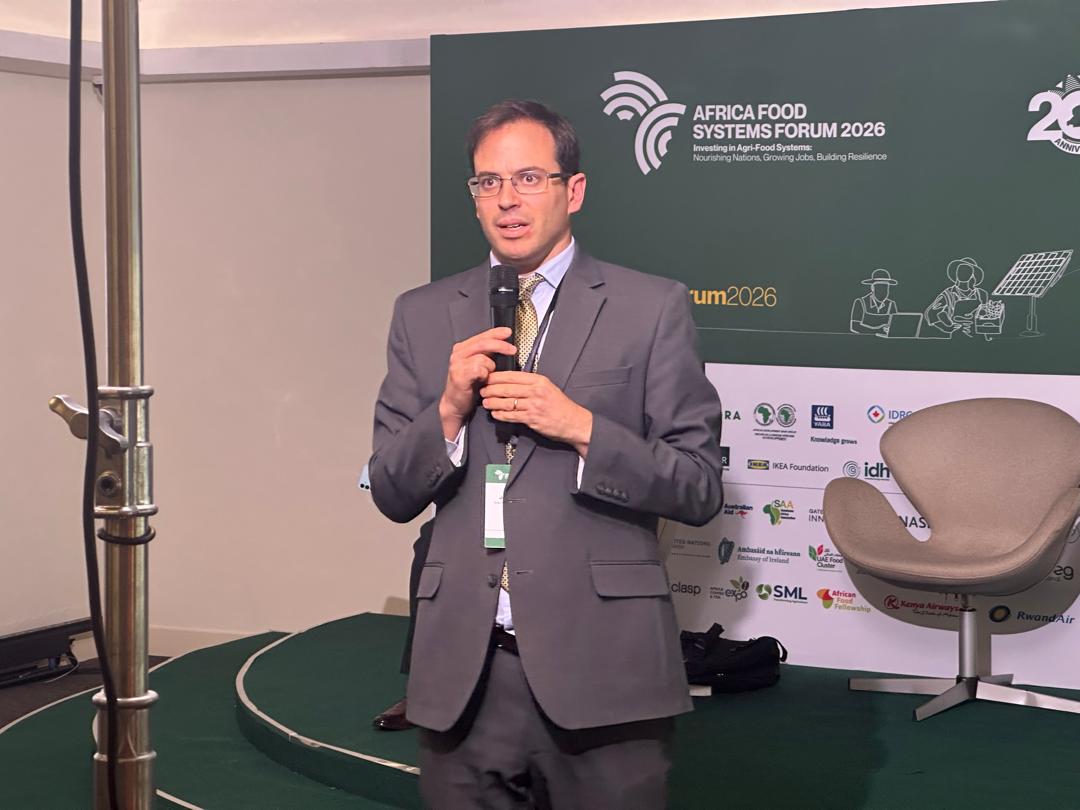
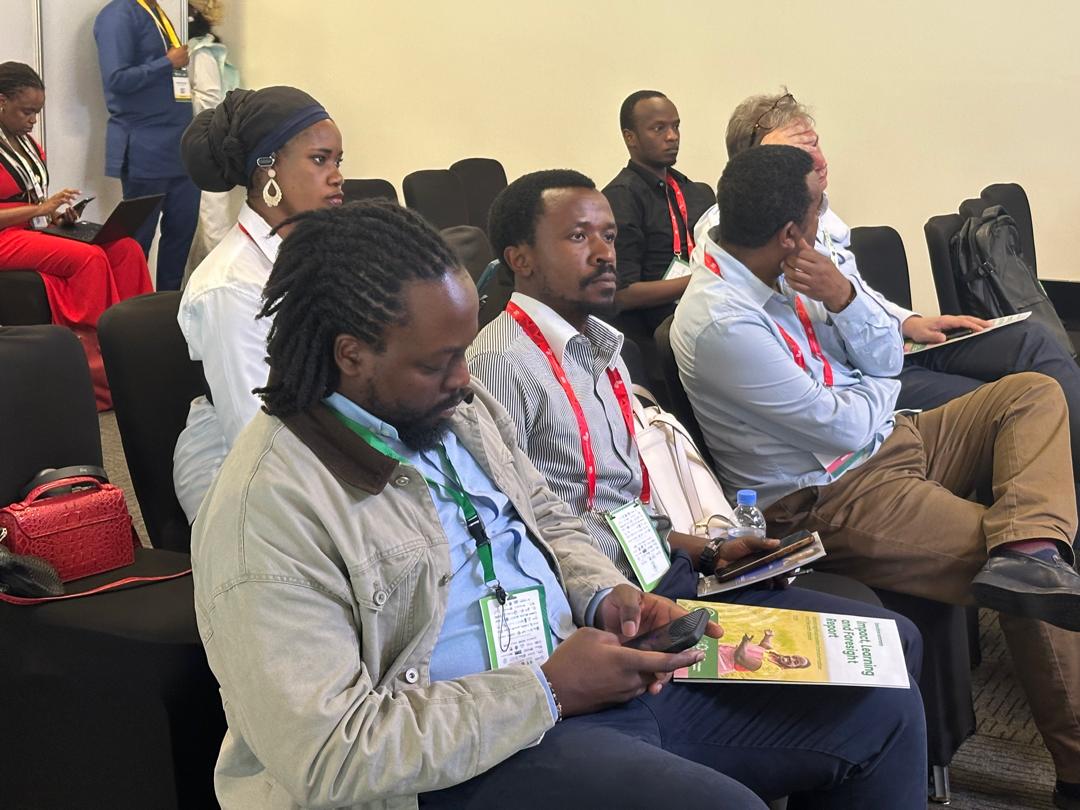
The admission came during a press conference at the Africa Food Systems Forum in Kigali, where AGRA presented a preliminary assessment of its 20-year journey and outlined priorities for the next phase of Africa’s agricultural transformation.
Professor Hamadi Boga, AGRA’s Vice President for Program Delivery, said Africa had moved considerably from subsistence farming towards more commercial agriculture, but the progress had not yet amounted to the transformation envisioned.
“We are moving, but we are not moving fast enough,” Boga told journalists.
He said agricultural productivity remains one of the continent’s biggest challenges, with yields increasing but still falling well below international levels.
Boga also warned that much of Africa’s increase in agricultural production has come through expanding cultivated land rather than sufficiently raising productivity on existing farmland.
“Most of this has come from extensification and not intensification,” he said.
According to AGRA, Africa’s agricultural sector is also being constrained by soil degradation, climate change, limited access to finance, weak connections between farmers and markets, inadequate off-farm employment and inconsistent government commitment.
Boga said agricultural transformation would require governments to not only develop policies but also ensure they are implemented consistently.
“Every time the government flip-flops, it creates uncertainty in the sector, and therefore we lag,” he said.
Focus shifts to farmer prosperity
Jonathan Said, AGRA’s Vice President for Technical Expertise, said the organisation’s next phase would put greater emphasis on connecting smallholder farmers with processors, markets and financial institutions.
“We know that we are not there yet. We’re not at transformation,” Said said.
AGRA’s interventions over the past 20 years have included strengthening agricultural research, seed systems and soil-health initiatives, while supporting African governments in developing agricultural investment plans.
But Said said the organisation had learned that isolated interventions were not enough to transform food systems.
He said farmers, governments, businesses, researchers, financiers and other actors must work together around specific value chains and national priorities.
“We need to learn how to play a much tighter catalytic role,” he said.
Under its current strategy, AGRA is seeking to strengthen market linkages, attract more local capital into agriculture, improve implementation of government policies and place women and young people more deliberately at the centre of agricultural transformation.
Africa must retain more value
Said also called for stronger local processing and consumption of African value-added products, arguing that more of the money generated by Africa’s growing food markets should reach farmers and African businesses.
“We need to make sure that that money when you go to the supermarket is channelling into the smallholder farmer and the farming system and the value chains locally,” he said.
He said Africa must also invest more in climate resilience, water management, biodiversity and soil health as farming remains heavily dependent on rainfall.
AGRA identified five priorities for accelerating transformation: increasing productivity, connecting supply with demand, expanding domestic and regional markets, mobilising public and private investment, and sustaining government commitment.
The organisation also stressed that farmer prosperity should be the ultimate measure of agricultural transformation.
“When farmers prosper, Africa will prosper,” Said said.
AGRA’s 20-year review concludes that Africa has built important foundations for agricultural transformation, but the next challenge is to turn those foundations into higher farm incomes, stronger businesses, resilient food systems and greater value retained within African economies.
theinspirerpublications@gmail.com



Leave a Reply