
Rwanda’s food system doesn’t just need more water, but its management
By Josue Niyonsingiza.

Water – vital to life – is at the heart of Rwanda’s food system yet it is often the missing ingredient. Food producers watch the skies, hoping and praying for rain, while droughts and unpredictable weather threaten their harvest. Meanwhile, as demand for food grows, so does the pressure on water resources.
The theme for this year’s World Water Day was “Catchments Preservation” and as fellows we must ask ourselves, how can Rwanda build a food system that thrives, not just survives, in the face of water challenges?
Farmers depend on it to grow crops, raise livestock, and sustain livelihoods. It is equally important in processing, distribution and consumption. Yet, despite its importance, water remains an uncertain resource.
Over 70% of Rwanda’s agriculture is rain-fed. In recent years, unpredictable weather patterns have made farming an even greater gamble. This volatility doesn’t just affect farmers—it disrupts food supply chains, increases food prices, and threatens the country’s food security.
The challenge however goes beyond water availability. Even when accessible, its efficient use remains a concern. Traditional irrigation methods often waste more water than they conserve, and many smallholder farmers lack the infrastructure to store and distribute water effectively.
Meanwhile, agricultural runoff from fertilizers and pesticides pollutes rivers and lakes, affecting both human health and aquatic life. Beyond production, lack of proper water treatment from processing facilities in Rwanda not only harms the environment but risks contaminating food products and posing health hazards to consumers.
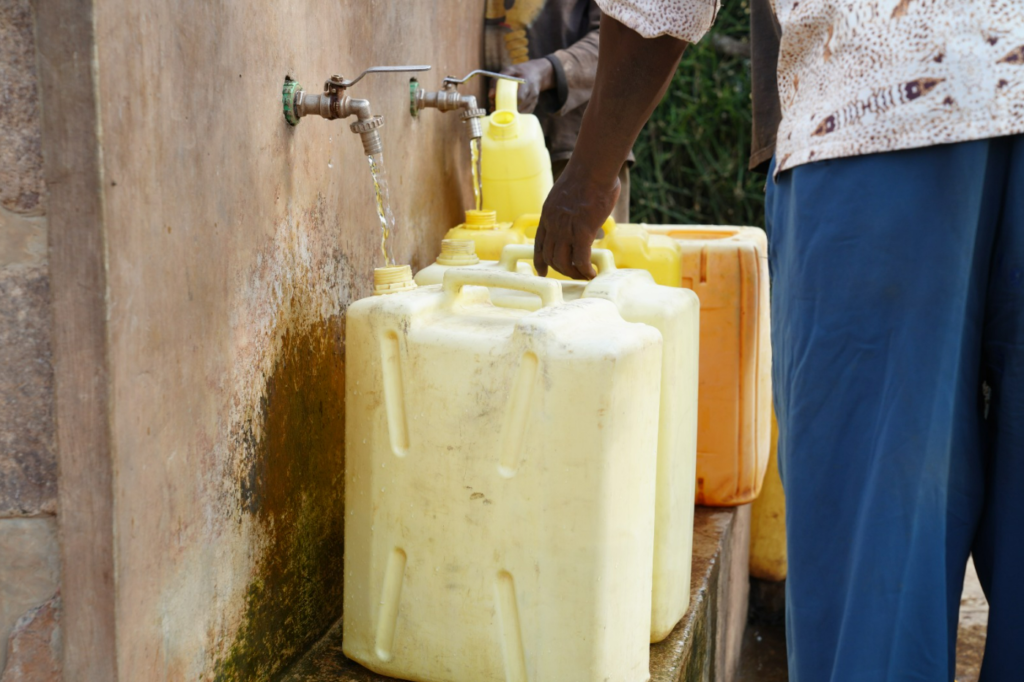
Clean water plays an important role in the distribution and consumption of food. Yet, in rural areas, access to clean drinking water is still a struggle and poses both nutrition and overall health issues. At the same time, Rwanda’s growing population and rising food demand are increasing pressure on water resources. If we continue with business as usual, competition for water between agriculture, industry, and households will only intensify. The question is clear: how do we ensure that water is not just available but sustainably managed to secure Rwanda’s food future?
For Rwanda’s food system to thrive, we should stop treating water as an infinite resource. The reality is stark: water is becoming scarcer, less predictable, and more contested. Without proactive solutions, farmers will continue to struggle against erratic rains, declining soil moisture, and increasing competition for water.
A major challenge is the continued reliance on rain-fed agriculture. While irrigation could provide a buffer against dry spells, only a small fraction of Rwanda’s farmland is irrigated. Many smallholder farmers—who produce the bulk of the country’s food—lack access to affordable irrigation technology, leaving them vulnerable to climate shocks. Even where irrigation exists, inefficient systems waste water, draining an already limited resource.
Beyond availability, quality is also a growing concern. Agricultural runoff, carrying fertilizers and pesticides, seeps into rivers and lakes, threatening drinking water sources and aquatic ecosystems. Poor waste management in food processing also contaminates water supplies, creating long-term environmental and public health risks.
Alongside population growth, there is also economic transformation and urbanization. With the industry sector and urbanization projected to grow, competition for water will intensify. If we do not act now, we risk a future where water shortages not only hurts farmers, but also drives up food prices, impact nutrition (both in urban and rural areas), and slow down economic growth.
The solution is clear: Rwanda must rethink how it manages water for food production. Investing in smart irrigation, promoting sustainable farming practices, and strengthening water governance are no longer optional—they are urgent necessities.
Ensuring that Rwanda’s food system thrives in the face of water challenges requires a shift from reactive to proactive water management. The good news is that solutions exist—they just need to be scaled up and implemented effectively, and more importantly the government has to be fully supportive.
First, expanding irrigation infrastructure is critical. While Rwanda has made progress in developing irrigation schemes, most smallholder farmers still rely solely on rainfall. Investing in affordable, small-scale irrigation systems—such as solar-powered pumps and drip irrigation—can help farmers maintain productivity even during dry spells. Programs that support farmers in adopting these technologies in order to drive up adoption, including subsidies and financing options, could make a significant difference.
Second, water-smart agricultural practices must become the norm. Techniques like mulching, agroforestry, and rainwater harvesting help farmers conserve moisture and reduce dependence on rainfall. Promoting soil and water conservation methods, such as terracing in Rwanda’s hilly regions, can also prevent erosion and maximize water retention.
Third, policies and incentives should prioritize sustainable water use. The government has made commendable efforts through the National Water Resources Master Plan, but implementation must be accelerated. Stronger policies that encourage efficient water use in agriculture, coupled with stricter regulations on pollution from farms and food processing industries, will be key. Additionally, public-private partnerships can drive investments in modern irrigation and water recycling technologies.
Finally, leveraging data and technology can improve water management. Mobile-based weather forecasting and digital advisory services can help farmers make better decisions on when and how to use water efficiently. Rwanda’s growing innovation ecosystem provides an opportunity to integrate smart water monitoring systems into agriculture, ensuring every drop counts.
The path forward is clear: Rwanda must embrace water-efficient, climate-smart agriculture to secure its food future. With the right investments, policies, and community engagement, we can ensure that water remains a source of resilience, not vulnerability, for our food system.
Rwanda has made remarkable strides in strengthening its food system, but without smarter water management, progress remains fragile. As climate change accelerates, so must our response. Water scarcity, erratic rainfall, and growing demand for food are challenges we can no longer afford to ignore.
The writer is Josue Niyonsingiza, Senior Research Analyst specializing in food systems. He holds a master’s degree and focuses on the intersection of agriculture, sustainability, and policy development.





Leave a Reply