
Empowering the marginalized: African universities champion inclusion and social responsibility
By Elias HAKIZIMANA
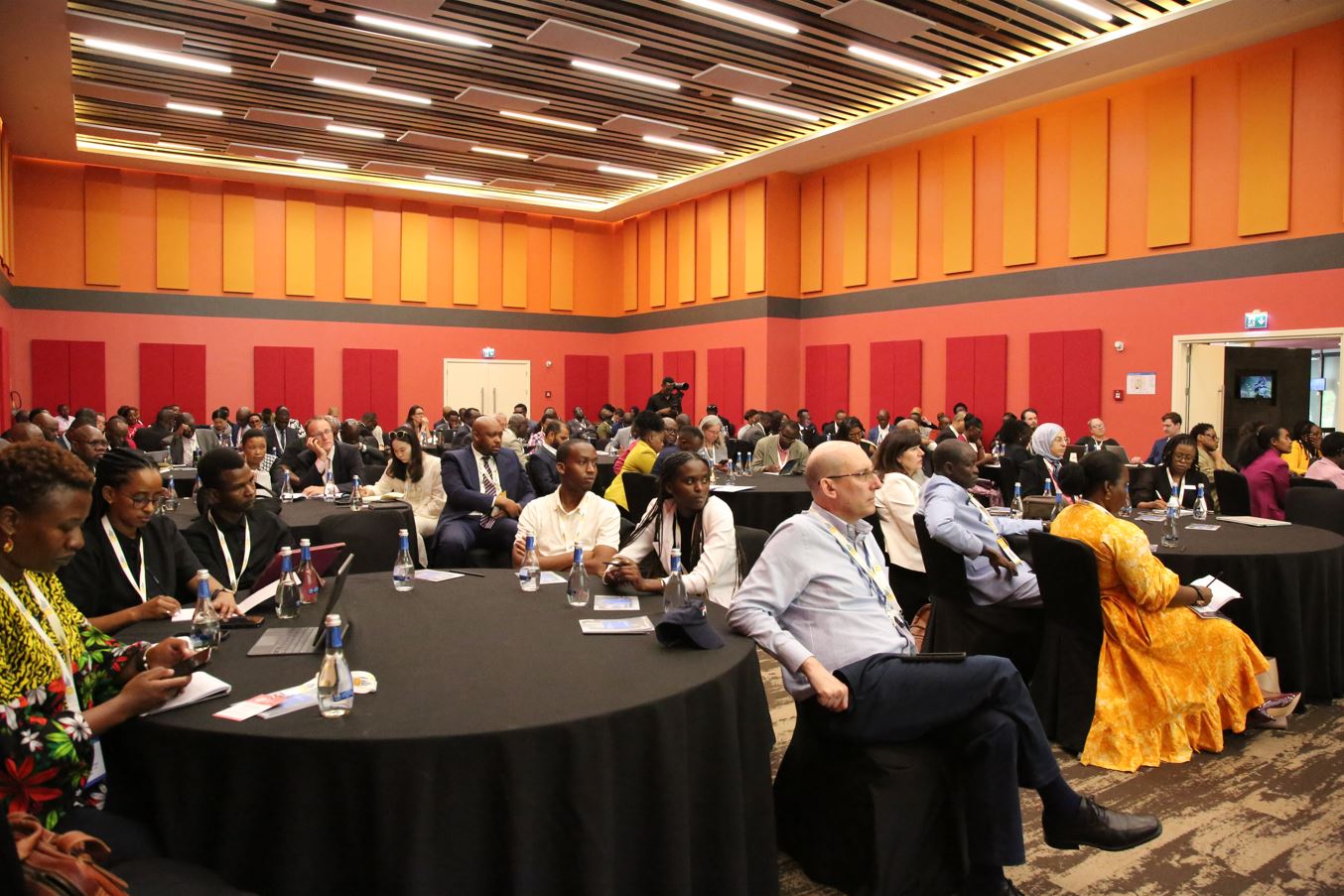
As the Africa Universities Summit, organized by Times Higher Education (THE), nears its conclusion, discussions have centered on how African higher education institutions can drive sustainable development.
Among the key takeaways from a pivotal panel discussion was the growing focus on making universities more inclusive, particularly for marginalized groups such as refugees and disabled students, and on instilling social responsibility in students beyond academic achievement.
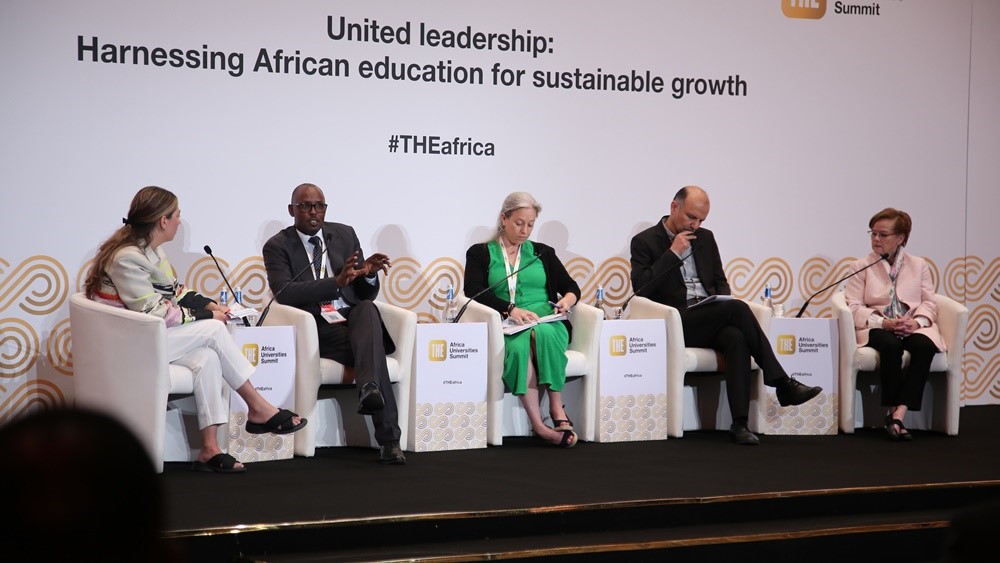
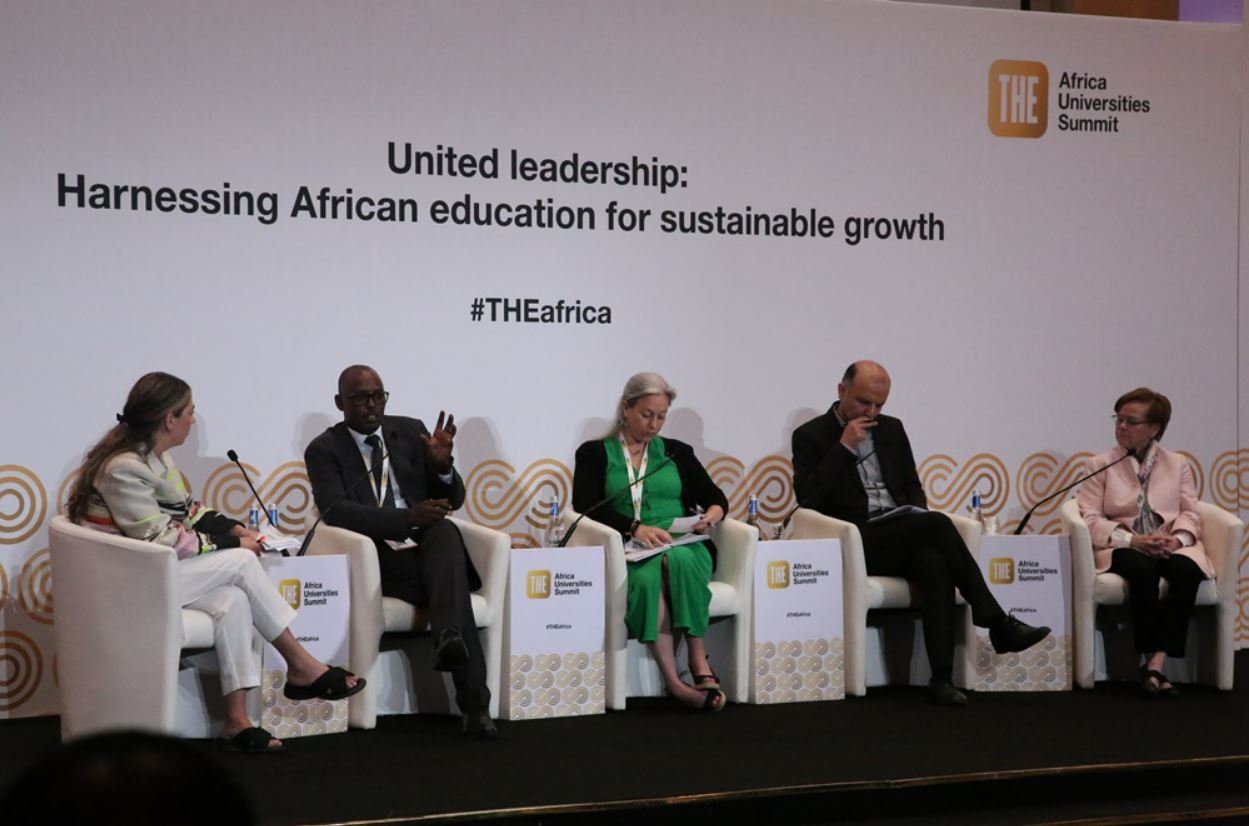
The session, titled “Moving Towards and Beyond 2030: The Role of African Universities in Continental Sustainable Development,” featured distinguished panelists, including Wander Banks, Senior Content Manager at THE; Margee Ensign, President of the American University of Bulgaria; Prof. Didas Kayihura Muganga, Acting Vice-Chancellor of the University of Rwanda; Arash Rashidian, Director of Science Information and Dissemination at the World Health Organization (WHO); and Clare Turner, Associate Director at Imperial College London.
Inclusion as a cornerstone of university growth
Didas Kayihura Muganga of the University of Rwanda made a compelling case for prioritizing accessibility and inclusivity in African higher education. He highlighted Rwanda’s unique approach to providing opportunities for refugees and disabled students, ensuring they are not left behind in the country’s educational progress.
“We don’t just recruit refugees within Rwanda but actively seek applicants across Southern Africa,” Muganga stated. “Additionally, we emphasize inclusivity in academic inductions, fostering a support network among students.”
This initiative, he explained, has led to heartwarming transformations in student attitudes, where peers have formed informal networks to assist disabled classmates. “The result has been a shift in perceptions—our students now understand that disability does not limit intelligence or capability,” he noted.
Fostering a mindset of social responsibility
While academic excellence remains a priority, institutions are increasingly recognizing their role in shaping students’ commitment to social good. Margee Ensign emphasized the importance of civic learning and community engagement in university curricula.
“We must ensure students not only succeed personally but also contribute to the common good,” Ensign said. She cited an example from Nigeria, where students were tasked with developing community-based projects to aid those displaced by Boko Haram. “Such experiences instill leadership and social awareness in students that extend far beyond the classroom,” she added.
Clare Turner of Imperial College London echoed these sentiments, pointing out that university students today are more inclined towards purpose-driven careers rather than traditional corporate paths.
“Traditionally, our students went into finance or engineering,” Turner said. “Now, more of them are gravitating toward entrepreneurship and socially impactful projects. University is the perfect time to take these risks and find meaningful work.”
Rethinking academic incentives for faculty
While students are embracing social responsibility, faculty engagement remains a challenge. Arash Rashidian from WHO stressed that academic structures often fail to reward long-term collaborations and community-driven initiatives.
“A multi-institutional project I was part of took five years before its first publication,” Rashidian noted. “Faculty need systems that recognize high-impact, long-term collaborations rather than just individual academic output.”
He also pointed out the need for professors to lead by example. “If professors of health policy do not engage in real-world policy work, how can we expect students to?” he asked. “Students follow what they see.”
Health challenges and african-led solutions
The role of universities in tackling health issues in Africa was another focal point of the discussion. Rashidian pointed out that Africa has only about 35 WHO Collaborating Centers, mostly concentrated in South Africa and North Africa, leaving vast potential untapped.
“Health challenges in Africa require African-led solutions,” Rashidian asserted. “Universities must prioritize local and regional networks instead of solely collaborating with distant institutions.”
A positive development was Rwanda’s Center for Biomedical Engineering and Health recently becoming a WHO Collaborating Center.
Muganga emphasized that the University of Rwanda’s close partnership with the Ministry of Health ensures that research is not only conducted but also implemented to make a tangible impact.
“Research must lead to real-world applications, or it won’t be sustainable,” he said.
The future of African universities in sustainable development
As the summit wrapped up, panelists stressed the need for African universities to redefine their roles in line with sustainable development goals. The U.S. land-grant university model, where research and education directly benefit local communities, was cited as an inspiration for African institutions.
“If universities integrate sustainability into local initiatives, students will emerge as engaged citizens, and cross-border collaborations will flourish,” Turner summarized.
With African universities increasingly recognizing the importance of accessibility, community-driven learning, and regional partnerships, the discussions at the Africa Universities Summit have set the stage for a more inclusive and impactful academic future across the continent.
theinspirerpublications@gmail.com


Leave a Reply