
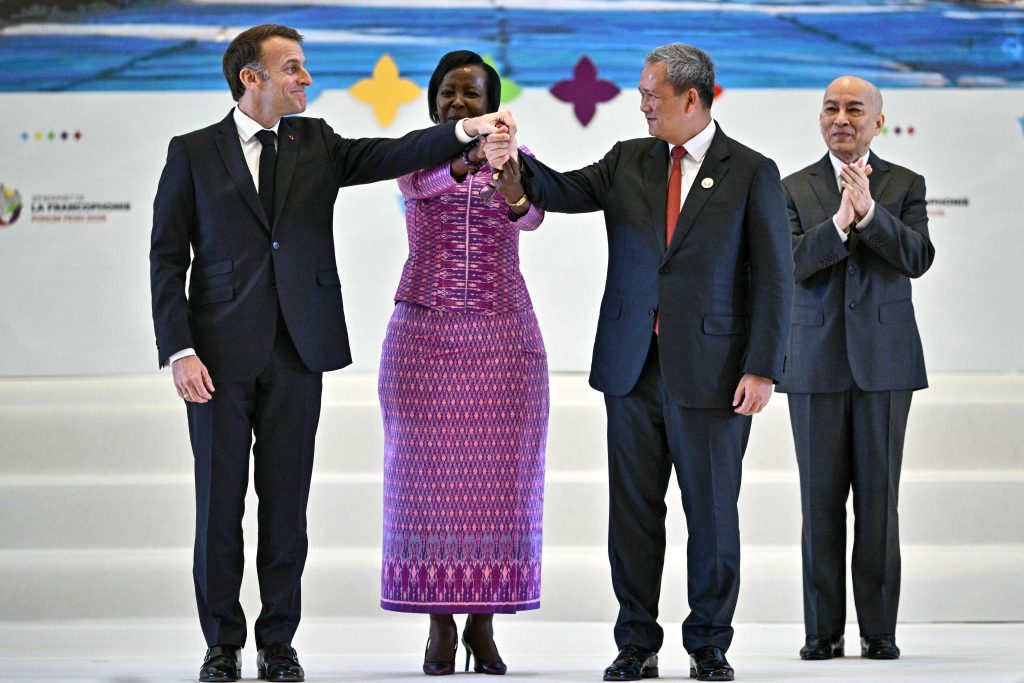
Mushikiwabo granted 12-month interim extension as OIF leaders fail to agree on successor
Louise Mushikiwabo will remain at the helm of the International Organisation of La Francophonie (OIF) for another 12 months in an interim capacity after member states failed to reach consensus on the organisation’s next leader.
The extension follows a deadlock over the leadership election, in which Mushikiwabo was seeking a third four-year term against Mauritania’s Coumba Bâ and former Romanian Prime Minister Dacian Cioloș. The Democratic Republic of Congo (DRC) had withdrawn its candidate, Juliana Amato Lumumba, from the contest.
Mushikiwabo has led the organisation since January 2019, when she began her first term, before securing a second mandate in 2022.
The 12-month interim arrangement is intended to allow time for member states to agree on a leadership transition. Rwanda is expected not to field another candidate for the Secretary-General position once the interim period ends.
The impasse unfolded amid diplomatic disagreements over Mushikiwabo’s bid, with Rwanda maintaining its support for her despite calls for her to step aside in favour of a candidate acceptable to a broader group of member states.
Kagame rejects calls for Mushikiwabo to withdraw
Rwanda’s President Paul Kagame reaffirmed his support for Mushikiwabo during a meeting with French President Emmanuel Macron on November 15, on the sidelines of the 20th OIF Summit in Phnom Penh, Cambodia.
According to French magazine Jeune Afrique, the discussions were tense, with Kagame accusing Macron of contributing to the divisions surrounding the leadership contest.
Kagame reportedly told the French leader that his pursuit of a particular outcome was at odds with the interests of the organisation. He also criticised what he viewed as Macron’s attempt to influence how other member states should make their decisions.
Macron sought to defend his position, but the meeting reportedly failed to resolve the disagreement.
Addressing the summit’s opening ceremony on November 15, Macron again called for consensus over the organisation’s leadership, warning that its growing membership made unity increasingly important.
“We must protect what makes this organisation strong, which is its unity,” he said, arguing that the Francophonie should not become inward-looking or allow internal divisions to undermine its purpose.
Mushikiwabo, in her own address, offered a different perspective on the debate, arguing that unity does not mean member states must share identical views.
“OIF unity does not require its members to hold identical views,” she said.
She described the organisation as an important political platform that brings together countries of different sizes and from different continents. She cautioned against turning it into an arena for political confrontation or allowing individual national interests to divide its members.
Her remarks came as divisions persisted over whether the leadership should be decided through consensus or a formal vote if member states could not agree on a single candidate.
Rwanda turns down Macron’s proposal
The disagreement followed an earlier attempt by Macron to persuade Kagame to withdraw Mushikiwabo’s candidacy.
Jeune Afrique reported that Macron made the request during discussions on the night of November 12–13, proposing that member states rally behind Cioloș, the former Romanian prime minister, to avoid a contested election that could deepen divisions within the organisation.
Rwanda rejected the proposal.
Foreign Affairs Minister Olivier Nduhungirehe made the country’s position clear at a meeting of OIF foreign ministers on November 14, saying Rwanda had no intention of withdrawing Mushikiwabo from the race, particularly under pressure.
The position reportedly sparked heated exchanges among delegates at the meeting.
The interim extension gives the organisation a temporary leadership arrangement while member states work towards an agreement on its next Secretary-General.




Leave a Reply