
Rwanda steps up efforts to combat climate change
By The Inspirer.
Rwanda is accelerating nationwide efforts to address climate change, building on its commitment to reduce greenhouse gas emissions and transition to cleaner forms of transportation and energy.
In 2020, Rwanda became the first African country to submit an enhanced climate action plan to the United Nations (NDC 3.0), outlining measures to cut emissions across key sectors including agriculture, mining, waste management and water. The plan targeted a 38 percent reduction in emissions by 2030.
One of its major goals was to increase the use of electric vehicles. By 2030, Rwanda aims for electric buses to account for 20 percent of public transport, electric motorcycles 30 percent, and private electric cars 8 percent. Since the push began in 2020, more than 7,000 electric and hybrid vehicles had been registered in the country by the end of 2024.
The initial climate plan required 11 billion dollars, including 5.3 billion dollars for adapting to existing climate impacts and 5.7 billion dollars for mitigation. By the end of the 2020–2025 NDC cycle, Rwanda had secured 4.5 billion dollars to support these efforts.
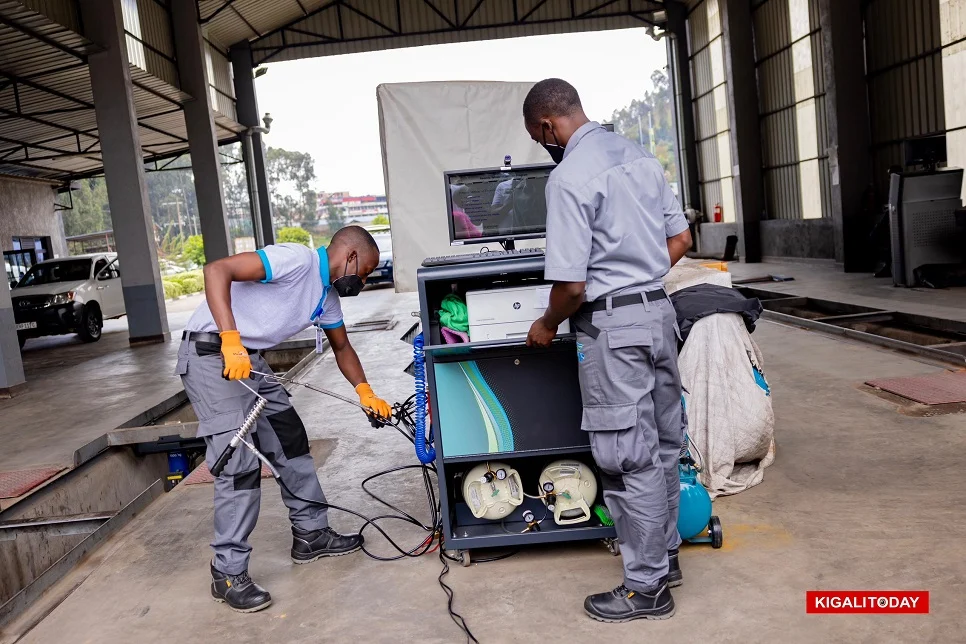
Rwanda has since updated its strategy, extending its target year to 2035 and raising the emissions reduction goal to 53 percent. The new version, which has an estimated budget of 12 billion dollars, places strong emphasis on national vehicle emissions testing led by the Rwanda Environment Management Authority (REMA).
Officials say the expanded plan marks a major step toward building a green and climate-resilient economy, in line with the Paris Agreement and Rwanda’s Vision 2050.
A new public transport system introduced this month in Kigali aims to make public travel more reliable and environmentally friendly. It is expected to contribute to national climate targets outlined in the National Strategy for Transformation (NST2) and Vision 2050.
As part of these efforts, the City of Kigali announced that beginning in 2026 no diesel-powered bus will be allowed to operate within the capital. Mayor Samuel Dusengiyumva said electric buses are already proving more economical.
“A diesel bus can spend up to around 180,000 francs per day, while an electric bus uses about 40,000 francs,” he said. “Starting next year, we want all public transport buses to be electric. We also want passengers to wait no more than three minutes at bus stops so we can reduce congestion and ensure comfortable and affordable transport.”
Bus Go Rwanda, a company assembling and supplying electric buses, says demand is growing rapidly. According to its Rwanda branch manager, Doreen Olishaba, the company currently operates more than 361 buses.
“Our target is to deliver 100 additional buses within the next 13 months and more than 200 within the next two years,” she said. “Our broader mission is to distribute electric buses across Africa, and we aim to reach at least 1,000.”
To support Rwanda’s transition to cleaner mobility, the World Bank recently approved more than 140 billion francs for the “Rwanda Urban Mobility Improvement” project.
Environment Minister Bernadette Arakwiye says regular air quality assessments continue to show high pollution levels, especially in Kigali. She noted that vehicle emissions remain one of the main contributors to poor air quality.
“Polluted air affects everyone, but it has particularly severe impacts on elderly people, children and those with respiratory illnesses,” she said. “Reducing polluting vehicles on the road and shifting to electric mobility will greatly improve the air we breathe.”
A new emissions testing program introduced in August requires all vehicles in Rwanda to undergo specialized testing for pollutants, separate from the usual vehicle safety inspection. The tests measure carbon monoxide, hydrocarbons, nitrogen oxides and fine particulate matter.
Vehicles that exceed permitted pollution levels cannot receive a roadworthiness certificate, and all vehicles are required to comply. Non-compliance can result in fines.
Rwanda’s updated climate plan builds on earlier achievements and will run until 2035, strengthening action across all sectors.
The World Health Organization warns that air pollution significantly increases the risk of respiratory diseases, heart conditions and lung cancer, particularly among pregnant women, children and people with chronic illnesses.




Leave a Reply