
Controversy erupts over taking oath in public service
By The Inspirer
An article of the draft law establishing the general statute governing public service which requires that a public servant has to take an oath before being allowed to start assuming their responsibilities has caused a controversy among parliamentarians.
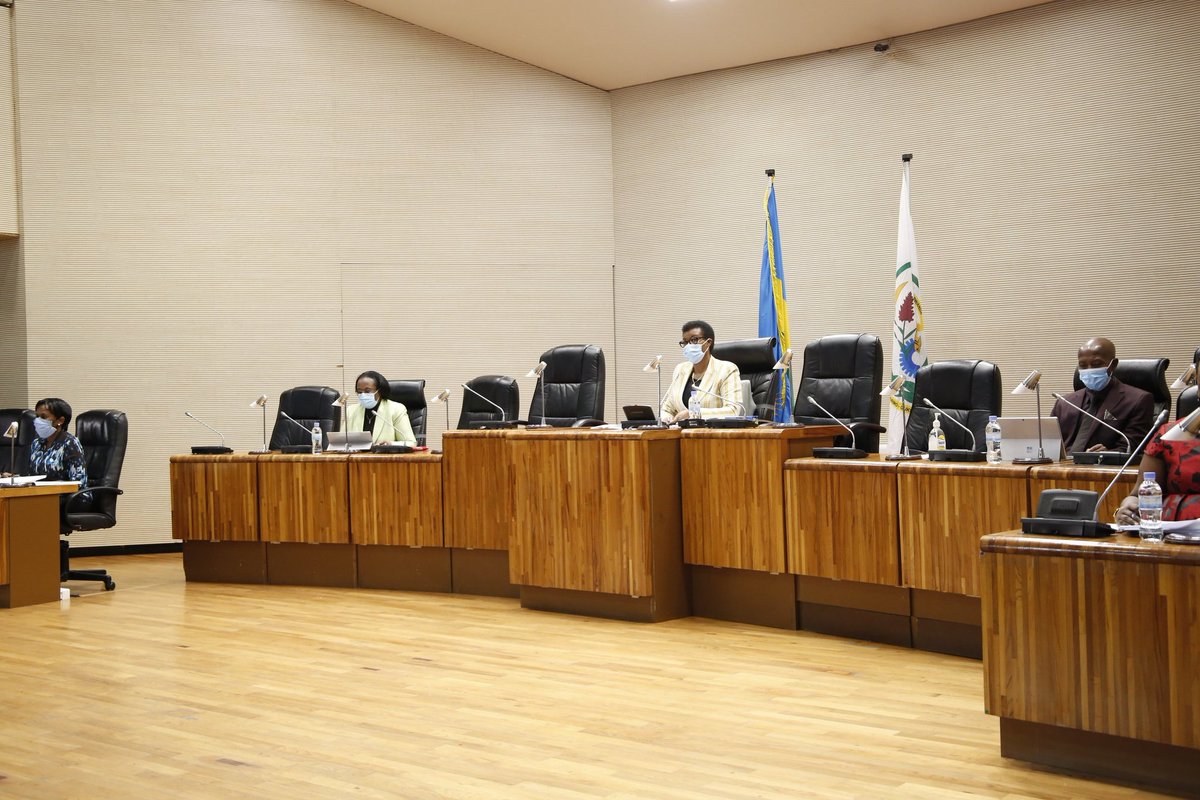
The debate emerged when the plenary sitting of the Chamber of Deputies was voting on the draft law on Wednesday, June 17, 2020 at Parliament.
The voting on the bill continues at Parliament at 3:00 pm today, Monday, July 27, 2020.
The article stipulates that a public servant takes an oath before commencing duties.
On the mode of swearing in, the article says that a public servant takes oath while holding the national flag with left hand and raising the right hand with a stretched palm. A public servant with disability, which does not enable him or her to hold the flag, takes an oath wearing the flag.
In case one refuses to take oath under such provisions, they are dismissed, and blacklisted [in the public service] for seven years.
The article was put to the vote two times as the debate continued after the first time. Overall, the article passed by 60 votes, but five MPs voted against it, while there were 4 abstentions and five nulls (spoiled votes).
MP Jean Pierre Hindura said that because a person taken on as a public servant is dismissed when they refuse to take oath holding the Rwandan flag, there should be an inclusive way to make the pledge given that Rwanda recognises different faiths.
He indicated that in the East African Community, public servants swear on the Bible.
“We have Jehovah’s Witnesses who do not hold on the flag [when swearing]. Yet, we (the country) recognise their faith. We should adopt the oath by flag or the Bible depending on one’s belief. People should not be excluded from the public service because of their faith,” he said.
MP John Ruku-Rwabyoma said that there are skilled people who want to work for their country but they are inhibited by the mode of swearing.
“Our society should be inclusive such that no Rwandan is excluded because of their faith. Even a public law can have exceptions,” he said pointing out that it is advisable to accommodate all people.
MP Suzanne Mukayijore said that clergy men and women do not take oath twice (when they already made a binding promise to serve God), expressing that the legal provisions might be a hindrance for their entry into the public service.
“Those people are good and productive workers. We might lose their contribution into the public service yet they are good and productive workers,” she said.
But, MP Francis Karemera said that if “Rwanda decides to swear in by holding the flag or on a Bible because we are in the East African Community, there might be a lack of focus on what to adopt given that Rwanda might join other regional blocks.”
“We should adhere to our choice,” he said adding that if a clergy person wants to work for the government, they leave the clergy and swear to serve it.
MP Eugene Barikana said that “we are governed by the Constitution and a public servant has to swear in compliance with its provision.
The Minister of Public Service and Labour, Fanfan Rwanyindo said that Rwanda is a secular state according to the Constitution – which implies that it is neutral in matters of religion or has not a state religion – insisting on the flag for oath.
“A person who has refused to take oath before commencement of public duties, does not agree with the values of the country nor want to work for the Government, rather the private sector. So, they should be expelled, penalised, blacklisted,” she said.
“The flag and its colours have meanings which correspond to what we believe as the Government. I do not understand how a person seeks to work for the Government when they do not accept what it promotes. That is not possible,” she said.




Leave a Reply